
Your teen used to tell you about their day, their worries, and the things that mattered to them. But now, they give answers which are short, conversations end quickly, and they spend more time alone in their room.
When a teenager stops opening up, many parents are left feeling worried, shut out, and unsure of what they did wrong. Conversations become shorter, answers turn into one-word replies, and attempts to connect can feel awkward or even rejected.
If you’re a parent reading this and realizing that your teen no longer opens up the way they used to, this guide is for you.
Here’s what we’ll cover:
- Why teenagers withdraw emotionally and what’s happening beneath the surface
- How to create conversations that feel safe instead of forced
- Common communication mistakes that unintentionally push teens away
- Practical strategies to help your teen open up at their own pace
- Signs that professional teen counselling may be worth considering
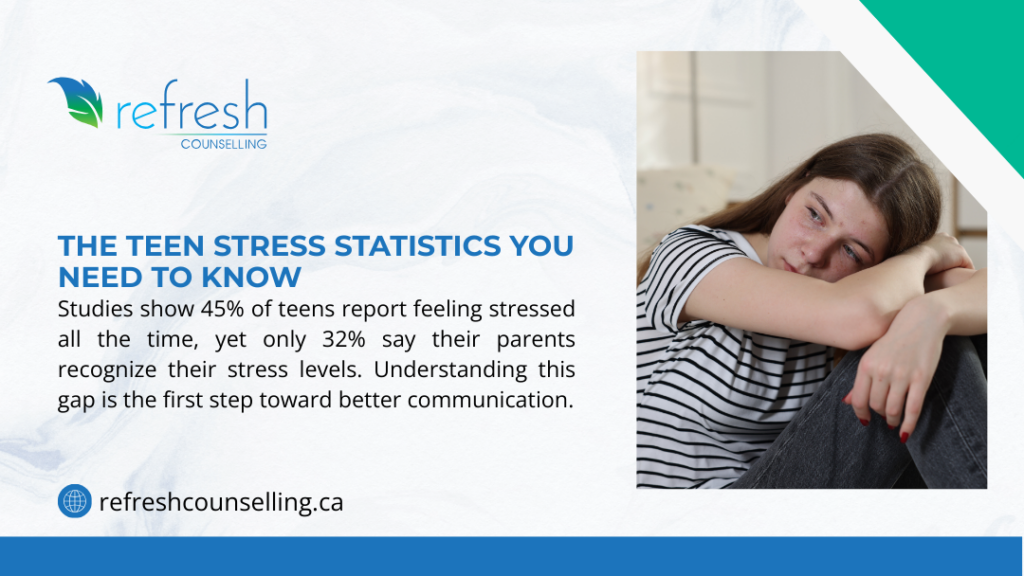
Why Do Teenagers Stop Opening Up to Their Parents All of a Sudden?
There are three main reasons why teenagers may stop opening up to their parents.
- Their Brain Development
During teenage years, the brain goes through a lot of changes. The emotional center (limbic system) is fully developed and working at full power, but the decision-making center (prefrontal cortex) is still under development.
This means your teen feels emotions intensely but struggles to understand or express them.
Research from the American Psychological Association, shows that teenagers feel more stress than adults do. But unlike adults, they often don’t have the skills or experience to handle those stressful feelings.
- The Push for Independence Creates Distance
If your teen avoids conversations, it might be because they’re trying to figure out their own identity without relying on your opinions or advice.
They’re not pushing you away personally, but learning to become more independent and make their own decisions.
- Fear of Judgment Keeps Them Quiet
From our work with teens in Calgary, fear is the biggest reason they don’t open up. They’re afraid you will:
- Get angry or disappointed
- Not understand their feelings
- Make the problem bigger than it is
- Take away privileges or freedoms
- Judge their friends or choices
Even loving, supportive parents can accidentally make teens feel judged. One critical comment can shut down communication for days.
5 Common Reasons Teens Shut Down
You might have noticed your teen spending too much time in room, avoiding family time, and giving short answers when asked about their day. This behavior often signals that they are struggling to open up.
Below are five common reasons why teens shut down emotionally:
| Reason | What It Looks Like | Why It Happens |
| Social Pressure | Stops talking after school, seems upset about friends | Friend drama feels overwhelming and embarrassing to explain |
| Academic Stress | Shuts down when you ask about homework or grades | Feels like a failure and fears disappointing you |
| Mental Health Struggles | Withdraws completely, seems sad or anxious | Depression and anxiety make everything harder, including talking |
| Relationship Issues | Becomes secretive, avoids family time | First relationships feel private and too personal to share |
| Identity Questions | Gets defensive about appearance, interests, or friends | Figuring out who they are and doesn’t want input yet |
Teens which are dealing with anxiety or depression find it especially hard to talk about what they’re experiencing.
How to Get My Teen to Open Up: Strategies That Work
These approaches come from our experience working with families at Refresh Counselling. They work because they create safety instead of pressure.
- Create Regular Low-Pressure Time Together
The best conversations with teenagers happen naturally during shared activities, and not during formal talks. You can try these connection opportunities:
| Activity Type | Why It Helps Teens Open Up |
| Side-by-side activities | Doing things together like driving, cooking, walking, or playing video games allows teens to talk without pressure. When they don’t have to make direct eye contact, they often feel more comfortable sharing their thoughts. |
| Regular rituals | Having consistent routines such as Friday pizza night or Saturday breakfast creates a sense of safety and predictability. |
| Showing interest in their hobbies | Even if you don’t understand TikTok trends or their favorite music, showing genuine curiosity about what they enjoy can build trust and open doors to more meaningful conversations. |
- Ask Better Questions
How you ask matters as much as what you ask. Good questions show curiosity without pressure.
| Instead of Asking: | Try Asking: |
| “How was school?” | “What was the most annoying part of your day?” |
| “Why are you upset?” | “You seem stressed. Want to talk about it, or should I just hang out here?” |
| “Did something happen?” | “On a scale of 1-10, how was today?” |
| “Tell me what’s wrong.” | “I’m here if you need me. No pressure to talk right now.” |
Notice how better questions give teens control. They can answer as much or as little as they want.
- Listen More To What They Say and Talk Less
A very good way which encourages your teen to open up, is to listen carefully to what they say without interrupting and giving advice immediately. This helps you create a safe space where your teen feels comfortable expressing their thoughts and feelings that truly matter.
Sometimes, just being there quietly is more powerful than any advice you can give.
- Share Your Own Struggles
Sharing some of your own challenges or feelings with your teen can help them feel less alone and more understood. When you open up, it shows your teen that everyone faces difficulties and it’s okay to talk about them.
Be careful to keep the focus on connection, not on venting or asking for support from your teen. The goal is to build trust and show vulnerability in a way that encourages your teen to open up about their own feelings.
This honest sharing can break down walls and create a sense of teamwork between you and your teen, making conversations more natural and genuine.

What NOT to Do When Your Teen Won’t Talk
- Don’t Force Conversations at Bad Times
Trying to have deep talks when your teen is tired, hungry, or stressed makes them shut down harder. The worst times to push for conversation:
- Right after school (they need decompression time)
- Late at night when they’re exhausted
- During arguments or discipline moments
- When they’re with friends or focused on activities
- Don’t Interrogate or Lecture
Rapid-fire questions feel like an interrogation. Long lectures make teens tune out completely.
Instead of “How was school? What did you do? Who did you sit with? Did anything happen?” try simpler approaches (we’ll cover in the next section).
- Don’t Dismiss Their Feelings
When you say “it’s not that bad” or “you’ll get over it,” your teen hears “your feelings don’t matter.” This is the fastest way to end honest communication.
Every feeling your teen has is real and valid to them, even if it seems small to you.
Why Professional Teen Counseling Helps
In counseling sessions, teens talk to someone who:
- Has no power over their daily life (no grounding, no rules)
- Won’t judge or lecture them
- Understands teen development and mental health
- Keeps conversations confidential (with safety exceptions)
- Teaches actual skills for managing emotions
From our work at Refresh Counselling, we’ve seen teens open up to counselors within the first session – sharing things they’ve never told their parents.
This doesn’t mean your relationship is broken, but it means your teen needs a neutral space to process feelings before they’re ready to share with you.
Connect with Caring Counsellors in Calgary
Refresh Counselling is a trusted mental health practice in Calgary to provide services related to your teen’s mental health.
From our 10 years of experience, we’ve earned the trust of hundreds of parents whose teens have received compassionate, personalized care that truly makes a difference.
We have teen counseling sessions to fit your teen’s needs. Many Calgary parents have found that professional support made the difference in reconnecting with their teens.
The best way to support your child’s mental well-being and answer the question “how to get my teen to open up” is by speaking with a professional.
Reach out to our team today to explore how we can help your teen find peace and balance again.
Frequently Asked Questions (FAQ) About How to Get My Teen to Open Up
How long does it take to get my teen to open up after they’ve shut down?
Every teen is different, but most families see small improvements within 2-3 weeks of consistent effort. Full trust rebuilding can take 2-3 months. The key is staying consistent with low-pressure connection time and better listening skills, even when progress feels slow.
What if my teen says they don’t want to talk to anyone, including a counselor?
This is common. From our work with reluctant teens, we’ve found that most resistance comes from fear of being judged or forced to change. Many teens who resist at first become engaged once they experience a safe, non-judgmental counseling session. Sometimes starting with family counseling instead of individual teen counseling feels less threatening.
Is it normal for teenagers to stop sharing everything with parents?
Yes, it’s completely normal for teens to become more private as they develop independence. Some reduction in sharing is healthy. The concern is when teens completely shut down, show warning signs of depression or anxiety, or when the lack of communication causes family conflict that affects everyone’s well-being.
Can I make my teen talk to me if they refuse?
No, and trying to force conversations usually backfires. You can’t make your teen talk, but you can create conditions where they feel safe enough to want to talk. Focus on removing pressure, building trust through consistency, and showing genuine interest in their world without judgment.
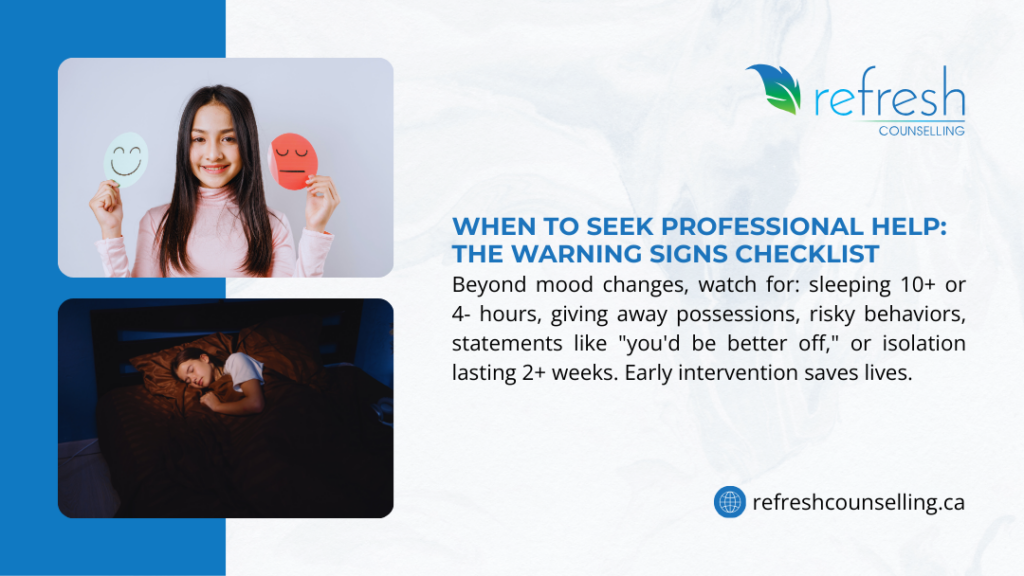
How do I know if my teen needs counseling or if this is just a phase?
Trust your instincts as a parent. If you’re worried enough to research this topic, that concern matters. Consider counseling if your teen shows mood changes, withdrawal, failing grades, self-harm, if family relationships are severely strained, or if you’ve tried improving communication for several weeks with no progress.