
Introversion vs. Social Anxiety: How to Tell the Difference Between Needing Solitude and Fearing Connection
Have you ever declined a weekend party invitation, choosing instead to stay home with a good book or a favorite movie? When you made that choice, how did it feel? Did it feel like a peaceful, much-needed sigh of relief? Or was it accompanied by a heavy knot in your stomach, a racing mind, and a lingering sense of guilt or self-criticism?
In our highly social, fast-paced world, people who prefer their own company or stay quiet in groups are frequently misunderstood. They are often given labels like “shy,” “antisocial,” or “anxious.” Because these terms are used interchangeably in casual conversation, it is incredibly easy to confuse two entirely different psychological experiences: introversion and social anxiety.
While they can look identical from the outside—both often result in someone sitting quietly in a corner or staying home altogether—the internal reality of each is completely different. One is a healthy, built-in personality trait. The other is a treatable mental health condition rooted in fear.
Understanding the true boundaries between them is not just an academic exercise. Mislabeling your experience can lead to unnecessary self-pressure, missed opportunities for personal growth, or a delay in seeking support that could genuinely transform your daily life.
1. The Core Difference: Preference vs. Fear
To truly understand how these two concepts differ, we have to look beneath the surface behavior and examine the underlying motivation. The fundamental distinction comes down to a simple contrast: preference versus fear.
What is Introversion?
Introversion is an innate personality trait, a structural component of your temperament that dictates how you interact with the world around you. It is entirely focused on energy management and where you go to recharge your biological battery.
Introverts are naturally more sensitive to dopamine, a brain chemical associated with rewards and external stimulation. Because their brains are highly responsive to their surroundings, busy environments like crowded networking events, loud parties, or open-concept offices can quickly overwhelm their nervous system.
When an introvert chooses solitude, it is a conscious, empowering preference. They do not dislike people, nor do they look down on socializing; rather, they simply enjoy and thrive in low-stimulation settings. Solitude feeds their well-being, allows them to process their thoughts deeply, and helps them return to social settings feeling refreshed.
What is Social Anxiety?
Social anxiety, on the other hand, is a recognized mental health condition characterized by an intense, persistent fear of being watched, judged, rejected, or embarrassed by others. It is not an element of a healthy personality; it is an active emotional defense mechanism designed to protect against perceived psychological danger.
For a person struggling with social anxiety, avoiding a social gather is rarely about a peaceful preference for being alone. Instead, it is an act of self-preservation to escape the distress of potential criticism. The driving force is a deeply ingrained belief that they will say the wrong thing, be mocked, or fail to fit in.
While an introvert steps away from a crowd to rest, a socially anxious person steps away to find safety.
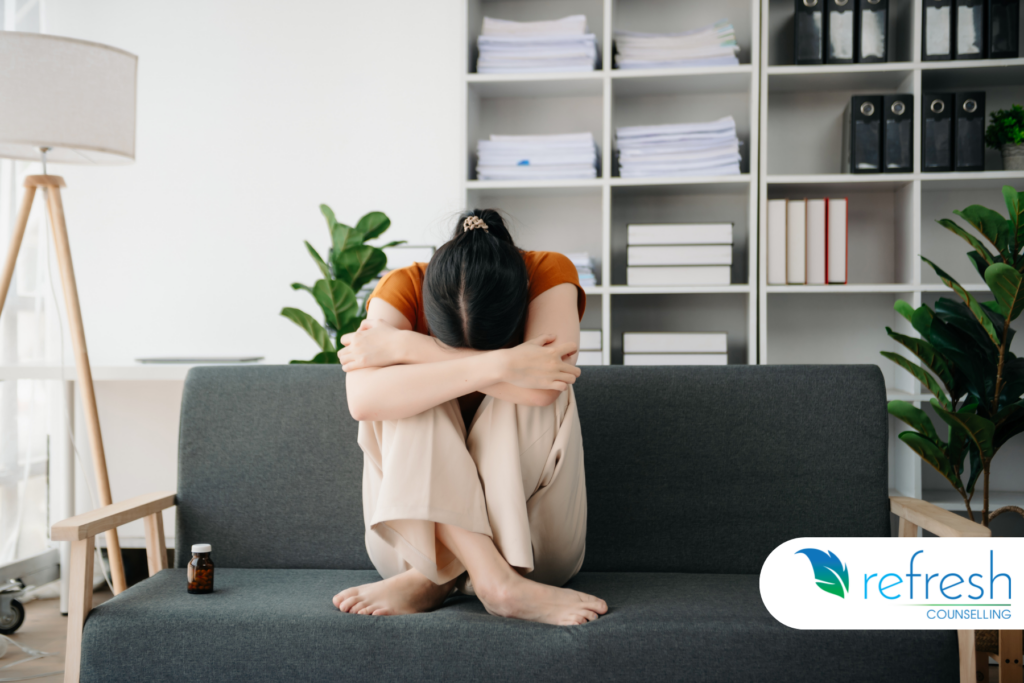
2. Main Talking Points: Side-by-Side Comparison
Because the behavioral outcomes of both experiences look so similar on the surface, comparing their core metrics side-by-side helps clarify the boundaries. The table below highlights how introversion and social anxiety express themselves across different areas of daily life.
| Feature | Introversion (Personality Trait) | Social Anxiety (Mental Health Condition) |
|---|---|---|
| Core Motivation | A desire to conserve or replenish energy. | A desire to avoid judgment, humiliation, or rejection. |
| The Internal Experience | Calm, content, reflective, and grounded. | Tense, hyper-vigilant, worried, and self-critical. |
| Physical Symptoms | General fatigue or sleepiness when overstimulated. | Racing heart, sweating, shaking, nausea, or shortness of breath. |
| View of Solitude | Restorative, chosen willingly, and deeply enjoyed. | Safe, but often accompanied by loneliness or frustration. |
| Social Functioning | Capable of socializing effectively when energy permits. | Wants to connect but is paralyzed by fear or insecurity. |
| Impact of Exposure | Energy naturally depletes, but feelings of self-worth remain steady. | Distress increases; leads to overanalyzing interactions later. |
3. How Overlap Creates Confusion
It is completely understandable why people confuse introversion with social anxiety. Human beings are complex, and behavioral traits rarely exist in isolated silos. The confusion deepens because these two experiences frequently cross paths, creating a blurry overlap that makes it difficult to diagnose what is actually happening inside.
The Overstimulated Introvert
Consider an introvert who has spent seven hours working in a chaotic, high-pressure office environment. By the time 5:00 PM arrives, their nervous system is entirely saturated with sensory input. If a coworker invites them to a crowded, noisy lounge for happy hour, the introvert might instantly feel a wave of tension or irritation.
If they force themselves to go, the sheer volume of noise and small talk may cause them to become quiet, withdrawn, or visibly rigid. To an outside observer, this look exactly like social anxiety.
However, the introvert isn’t sitting quietly because they fear their coworkers are judging them. They are quiet because their brain has run out of the cognitive bandwidth required to process language and maintain conversation. Their silence is a sign of exhaustion, not fear.
The Isolated Extrovert with Social Anxiety
To complicate matters further, social anxiety does not care about your baseline personality type. It is entirely possible to be a natural extrovert—someone who genuinely draws life, inspiration, and energy from being around others—while simultaneously suffering from severe social anxiety.
An anxious extrovert desperately craves the energy of a crowded room, but their anxiety traps them behind a wall of fear. They may stand silently at the edge of a gathering, desperately wanting to join a conversation but paralyzed by the terrifying thought that they aren’t interesting or welcome.
Because they are quiet and isolated, people often mislabel them as introverts. In reality, they are extroverts experiencing a painful disconnect between what their soul desires (connection) and what their anxiety allows them to experience.
4. Clues to Look for in Your Inner Dialogue
If you are trying to figure out where your own quiet nature comes from, the most reliable evidence is found by listening closely to your internal dialogue. The words, tone, and themes of your private thoughts right before, during, and after a social event will tell you exactly what is driving your behavior.
The Introverted Monologue: Rest and Recovery
When an introvert decides to skip an event or leave early, their inner monologue is practical, peaceful, and entirely focused on body budget and physical capacity.
- “That was a great dinner, but my brain is shutting down. I need to go home, put on comfortable clothes, and be completely quiet for the rest of the night.”
- “I really like those people, but I don’t have the energy for a party tonight. I’m going to stay in, order food, work on my project, and catch up with them one-on-one next week when I can focus.”
Notice that this dialogue lacks self-punishment. The decision to stay home is viewed as a healthy act of self-care, and the time spent alone is filled with a sense of comfort and ease.

The Socially Anxious Monologue: Risk and Rejection
When social anxiety takes the wheel, the internal script shifts into a harsh, highly critical interrogation. The thoughts are forward-looking, catastrophic, and deeply focused on perceived personal inadequacy.
- “If I go to that party, everyone will immediately notice how awkward I am. I’ll stand there by myself, look ridiculous, and ruin the mood.”
- “Why did I say that during the meeting? I sound completely foolish. I bet everyone is texting each other right now talking about how bad it was. I should just stay home where I can’t mess up anymore.”
Even when a socially anxious person stays home and finds physical safety, their mind rarely finds peace. The evening is spent overanalyzing past conversations, worrying about future events, and feeling a deep sense of shame for not being “normal.”
5. Why Mislabeling Matters
Distinguishing between introversion and social anxiety is far more than a technical formatting challenge for psychologists. The labels we apply to our internal lives shape how we treat ourselves, the goals we set, and the paths we take toward personal growth. Mislabeling these states can have significant, long-term consequences on your emotional well-being.
CONSEQUENCES OF MISLABELING
──► Breeds deep shame & exhaustion ──► Normalizes living life in a state of fear
The Danger of Pathologizing Introversion
When we treat introversion as if it were social anxiety, we turn a beautiful, natural personality variation into a problem that needs to be fixed. Introverts who believe they are broken often force themselves into a grueling cycle of behavioral exposure. They push through constant overstimulation, attend every event, and try to perform as extroverts to meet societal expectations.
This pathologizing breeds deep internal shame. It tells the introvert that their natural need for quiet is a defect. Over time, ignoring your biological need for solitude results in profound emotional exhaustion, burnout, chronic stress, and an existential feeling that you cannot be loved for who you truly are.
The Danger of Normalizing Social Anxiety
Conversely, missing social anxiety by casually writing it off as “just my introversion” can trap someone in an escalating cycle of avoidance. Because avoidance provides immediate relief from fear, it becomes a default coping mechanism.
If you believe your fear of connection is simply part of your personality, you will never challenge it. Over time, social anxiety causes your world to shrink. You may turn down career advancements, avoid romantic relationships, drop out of hobbies, and lose touch with friends.
While introversion is an enriching way to live, untreated social anxiety often leads to deep isolation, loneliness, and clinical depression. It keeps you from living a life aligned with your true values.
6. Navigating the Path Forward
If you realize that your quiet nature is a mix of both introversion and social anxiety, please know that you are not alone. It is incredibly common to navigate both realities simultaneously. Recognizing where your personality ends and your anxiety begins is the first step toward building a balanced, fulfilling life.
For the introverted parts of yourself, the path forward is all about radical self-acceptance. You must learn to honor your boundaries without offering apologies. Learn to say “no” to invitations when your battery is low, plan your weekly schedule to include dedicated windows of quiet time, and let go of the cultural myth that you must be loud to be impactful.
For the anxious parts of yourself, the path forward centers on compassionate growth. Unlike a fixed personality trait, social anxiety is highly responsive to treatment. Through supportive evidence-based approaches like Cognitive Behavioral Therapy (CBT), you can learn to challenge critical thoughts, gently face your social fears at your own pace, and build a sense of confidence in social spaces.
You do not have to change who you are to find peace. Whether you simply need to build more rest into your routine or require professional support to break free from a cycle of fear, prioritizing your mental health is always a worthwhile investment. Contact Refresh Counselling to book a consultation.