
How Music Therapy Can Support Children and Teens
As a parent, you often know when something is going on with your child.
Maybe they seem quieter after school. Small things are suddenly causing bigger reactions. Their sleep has changed, they seem more anxious, or they just don’t quite seem like themselves.
But when you ask, “What’s wrong?” or “How are you feeling?” the answer might be a shrug, an “I don’t know,” or simply silence.
For younger children, finding the words to describe emotions like anxiety, grief, frustration, or overwhelm can be difficult. Teenagers may have the words but not always feel ready or comfortable talking about what they’re experiencing.
Sometimes therapy doesn’t have to begin with a conversation.
Music Therapy gives children and teens another way to communicate, express themselves, and explore what they’re experiencing. Through music, rhythm, creativity, and connection, a Music Therapist can create opportunities for young people to work toward therapeutic goals without requiring them to put everything into words.
1. What Is Music Therapy — And What Isn’t It?
Because music is already such a familiar part of our lives, it’s easy to misunderstand what Music Therapy actually is.
Is it a music lesson? Does your child sit and listen to relaxing music? Do they need to know how to play an instrument?
Music Therapy is the intentional use of music within a therapeutic relationship to work toward individualized goals. A trained Music Therapist uses music and musical experiences as part of the therapeutic process.
The important distinction is that learning music isn’t the goal. Music is the tool.
A child might use music to explore emotions, develop coping strategies, build confidence, communicate, connect with others, or work toward other therapeutic goals.

What Music Therapy Is Not
It is not a music lesson.
Your child isn’t there to master an instrument, learn to read music, or prepare for a performance.
It isn’t simply listening to music for relaxation.
Listening to music can certainly feel good, but Music Therapy involves the intentional use of music based on the child’s therapeutic needs and goals.
It doesn’t require musical ability.
Your child doesn’t need to sing, play an instrument, read music, or even think of themselves as “musical.”
There isn’t a test, audition, or performance at the end.
2. Why Music Can Give Kids Another Way to Communicate
Communication is about much more than words.
Think about how quickly a song can change your own mood, bring back a memory, or express something you haven’t quite been able to say yourself.
Children and teenagers can experience music in much the same way.
A teenager who doesn’t want to answer, “Why are you upset?” might be perfectly willing to share a song that describes their week. That song can give the therapist somewhere to begin.
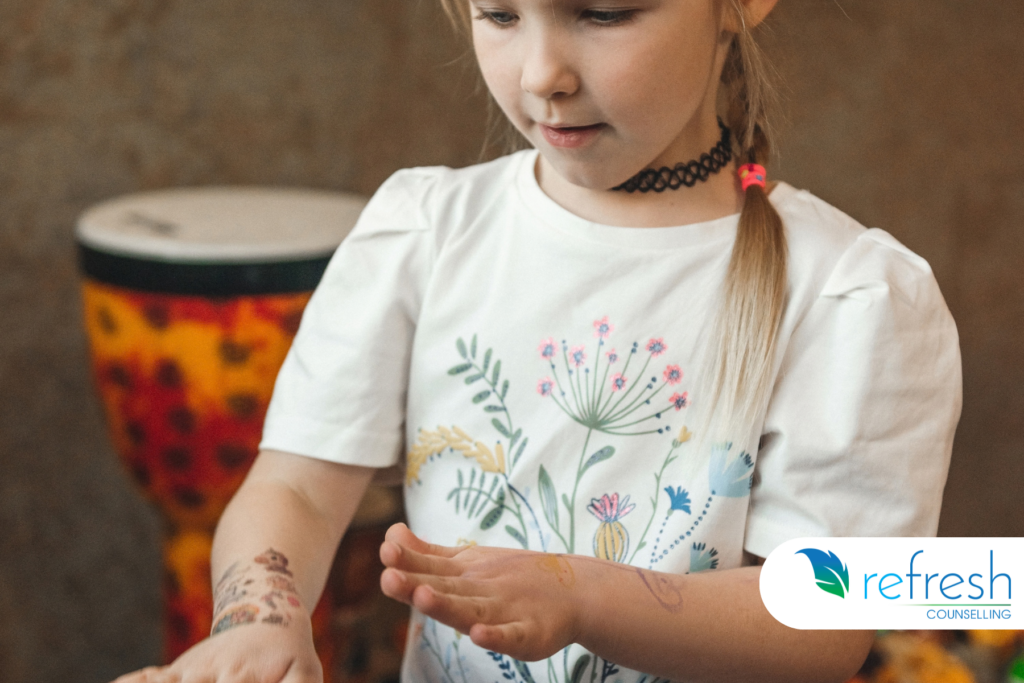
A younger child might use a drum or another instrument to express energy or emotion they don’t yet know how to describe.
Music can create another way into the conversation.
A therapist might use:
- Rhythm to provide structure and help a child slow down or settle.
- Lyrics as a starting point for talking about feelings or experiences.
- Instruments to give children a way to express themselves without relying entirely on words.
- Musical preferences to connect with a teenager’s interests, identity, and experiences.
Sometimes the music itself becomes the conversation.
Music Lessons vs. Music Therapy
| Music Lesson | Music Therapy | |
| Main Goal | Develop musical skills | Work toward therapeutic goals |
| Focus | Technique and learning music | Expression, connection and well-being |
| Musical Ability | Skills develop over time | No musical experience required |
| Activities | Practice, instruction and performance | Music-making, listening, songwriting, rhythm, movement and reflection |
| Success Looks Like | Developing musical ability | Progress toward the child’s individual therapeutic goals |
3. What Actually Happens in a Music Therapy Session?
One of the biggest questions parents have is simply: What will my child actually do?
There isn’t one standard Music Therapy session because sessions are designed around the individual child.
Depending on their age, interests, comfort level, and therapeutic goals, a session might include:
Playing Instruments
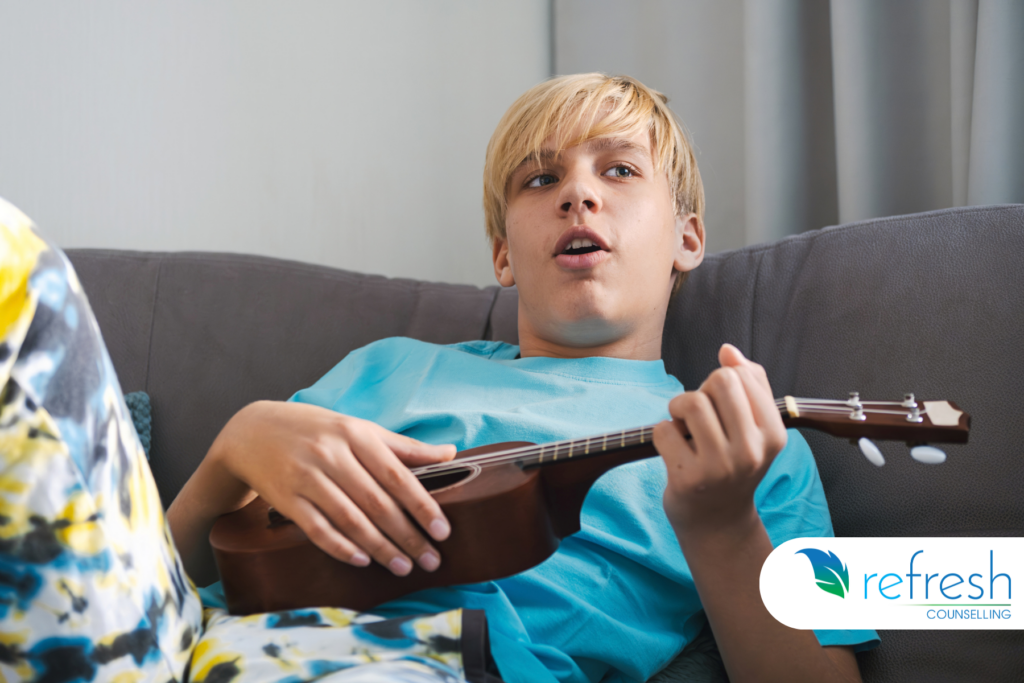
Children may explore accessible instruments such as drums, percussion instruments, xylophones, keyboards, or guitars.
There is no expectation that they play them “correctly.” The focus is on the experience rather than the performance.
Creating Music
A child and therapist might create rhythms, sounds, or music together. This can provide opportunities for creativity, communication, connection, and emotional expression.
Songwriting
Older children and teenagers may write their own songs or change the lyrics to an existing song.
Writing about an experience can sometimes feel easier than sitting across from someone and explaining it directly.
Listening to Music
Music chosen by either the child or therapist can be used for relaxation, reflection, emotional exploration, or simply as a starting point for conversation.
Talking About Lyrics
A therapist and child might explore the meaning behind a song or discuss why certain lyrics resonate.
Talking about someone else’s song can sometimes open the door to talking about our own experiences.
Movement and Rhythm
Music may also be paired with movement or rhythmic activities, particularly with younger children.
Conversation and Reflection
Music Therapy isn’t necessarily non-verbal. Music and conversation can work together.
A musical activity might lead naturally into questions such as, “What did that feel like?” or “Why did you choose that song?”
4. What Can Music Therapy Support?
Rather than thinking about Music Therapy only in terms of diagnoses, it can be helpful to think about the areas where a child or teenager may need additional support.
Emotional Expression
Some feelings are difficult to explain.
Music can give children another way to explore and express sadness, frustration, anxiety, excitement, grief, or other emotions.
Emotional Regulation
Music and rhythm can be incorporated into strategies that help children notice their emotions, manage big feelings, and find ways to settle when they feel overwhelmed.
Communication and Connection
Creating music together can provide opportunities to practise listening, sharing, taking turns, and connecting with another person without requiring constant conversation.
Confidence and Self-Expression
Music can give children and teens an opportunity to make choices, create something that belongs to them, and express their identity in a way that feels authentic.
For teenagers especially, musical preferences can be an important part of how they understand and express who they are.
5. What Should Parents Know Before the First Session?
Trying any new type of therapy can feel unfamiliar. A few things can help you and your child know what to expect.
There is no test. Your child isn’t auditioning, performing, or being graded. There is no way to “do Music Therapy wrong.”
Every child is different. A quiet teenager who loves listening to music may have a very different session from an energetic seven-year-old who wants to explore every drum in the room.
Your child’s interests matter. Their favourite songs, artists, instruments, sounds, and musical preferences can all become part of the therapeutic process.
Goals are individualized. The therapist works with the child and family to understand what support may be most helpful.
Parent involvement can vary. Depending on the child’s age and therapeutic needs, parents may sometimes participate or receive information about broader goals and progress. With teenagers, privacy and trust are also important parts of creating a safe therapeutic relationship.
Exploring Music Therapy at Refresh Counselling
Sometimes words come easily. Sometimes they don’t.
Music Therapy offers children and teenagers another way to communicate, explore emotions, build skills, and connect with someone who is there to support them.
At Refresh Counselling and Refresh Jr., Music Therapy is tailored to each child’s interests, strengths, comfort level, and individual therapeutic goals.
If you’re wondering whether Music Therapy might be a good fit for your child or teen, contact Refresh Counselling to learn more or book a consultation.