
Article Summary:
- Why trust breaks down in the first place
- Five practical steps for how to rebuild trust in a relationship
- What both partners need to do differently
- When professional support makes the biggest difference
Every relationship faces moments where trust gets tested. Maybe it’s a broken promise, a hidden truth, or just patterns that make you feel uncertain about where things stand.
If you’re reading this after a recent breach of trust with your partner, you’ve come to the right place. Here are five psychological-tested steps for you to follow to heal and rebuild trust with your partner.
Why Trust Breaks Down
Trust issues in relationships rarely appear overnight. They build up through patterns of behavior that make one or both partners feel unsafe.
| Common Trust Breakers | How It Damages the Relationship |
| Lying or hiding information | Creates doubt about what else might be hidden |
| Breaking promises repeatedly | Shows your words don’t match your actions |
| Emotional or physical cheating | Shatters the foundation of safety and commitment |
| Criticizing or dismissing feelings | Makes your partner feel unheard and unvalued |
| Sharing private information with others | Breaks the confidential safety of the relationship |
Sometimes the damage comes from one big betrayal. Other times it’s a thousand small moments where someone felt let down or dismissed.
Either way, mending a damaged relationship requires both people to acknowledge what went wrong and commit to doing things differently.
5 Steps On How To Rebuild Trust in A Relationship
1. Take Full Responsibility Without Excuses
The person who broke trust needs to own their actions completely.
| What Real Accountability Sounds Like | What NOT to Say |
| “I lied to you about where I was, and that was wrong. I understand why you can’t trust me right now.” | “I’m sorry you feel that way” |
| “I broke your trust and I take full responsibility for that.” | “It wasn’t that big of a deal” |
| “You have every right to be hurt by what I did.” | “You made me do it because you were always nagging” |
| “I’m committed to earning back your trust, however long it takes.” | “Can’t you just get over it already?” |
From my experience working as a couple psychologist, forgiveness after cheating or other major betrayals starts with genuine remorse, not defensive excuses.
2. Create Complete Transparency
If you’re the hurt partner struggling with thoughts like “I love my boyfriend but I don’t trust him,” transparency from your partner helps ease that anxiety over time.
| What Transparency Looks Like | What It’s NOT |
| Voluntarily sharing your day | Being interrogated constantly |
| Open access to phones and accounts | Obsessive checking and monitoring |
| Honest answers to direct questions | Sharing every single thought |
| Being where you say you’ll be | Having no privacy at all |
3. Communicate Openly About Feelings
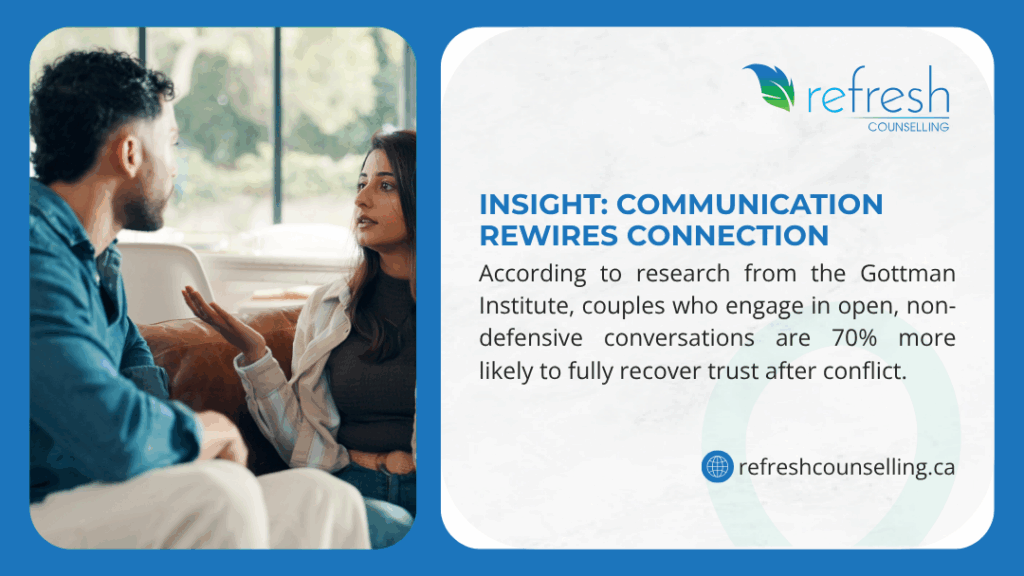
Both partners need space to express what they’re experiencing without judgment.
For the hurt partner:
- Talk about your pain as many times as you need to
- Express when something triggers doubt or insecurity
- Ask questions that help you understand what happened
- Share what you need to feel safe again
For the person who broke trust:
- Listen without getting defensive
- Don’t say “I already apologized” to shut down conversation
- Validate their feelings even when it’s uncomfortable
- Be patient with the healing timeline
Learning how to communicate your needs in a relationship becomes especially important during trust rebuilding.
4. Rebuild Connection Through Small Actions
Ways to rebuild intimacy start with consistent, small gestures that prove you care.
Grand apologies mean nothing without daily follow-through. Trust comes back when your partner sees you showing up reliably in little moments.
Trust-building exercises for couples include:
- Following through on every promise, no matter how small
- Showing physical affection that feels safe and welcomed
- Planning quality time together without distractions
- Asking about their day and actually listening to the answer
- Being patient when they have moments of doubt or anxiety
5. Give It Time and Stay Consistent
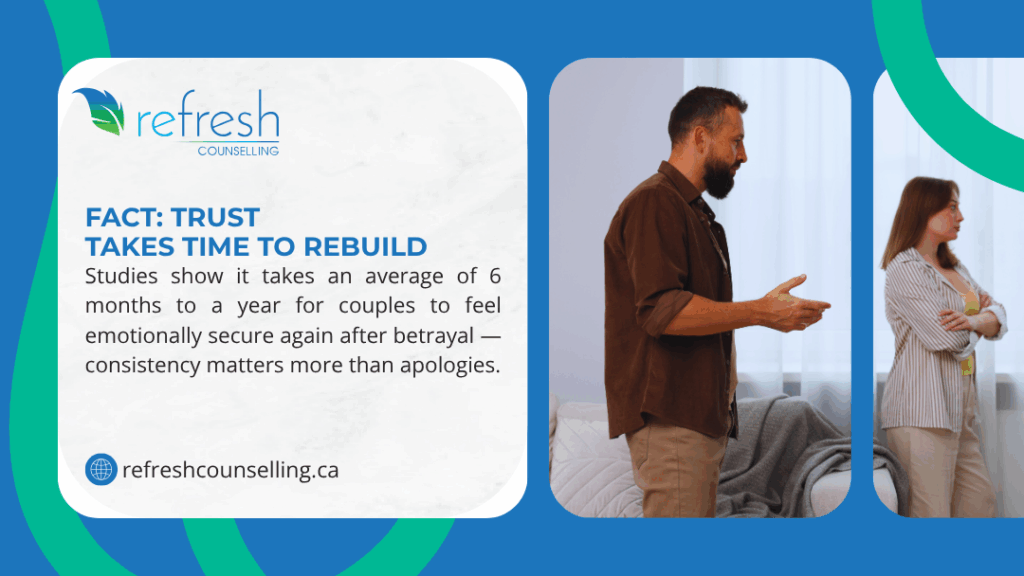
Here’s the hard truth about how to regain trust in love: it takes much longer than most people expect.
Relationship healing tips always include patience because rushing the process backfires. You can’t demand that your partner trust you again just because you’ve been “good” for a few weeks.
| Rebuilding Timeline | What to Expect |
| First 1-3 months | Raw emotions, frequent doubts, need for constant reassurance |
| 3-6 months | Small signs of progress, fewer emotional outbursts, moments of hope |
| 6-12 months | Trust slowly returning, feeling more secure, building new patterns |
| 12+ months | Relationship feels stable again, past betrayal doesn’t dominate daily life |
What Each Partner Needs to Do
Recovering from emotional hurt is a two-person job. Both partners have specific responsibilities during the rebuilding process.
| The Person Who Broke Trust | The Hurt Partner |
| Take full accountability | Express feelings honestly |
| Stay completely transparent | Be open to healing gradually |
| Be patient with questions | Set clear boundaries |
| Prove trustworthiness daily | Avoid constant punishment |
| Accept consequences | Notice positive changes |
Communication and trust in couples improve when both people understand their role in the healing process.
When Professional Support Makes the Difference
Sometimes couples need guidance to navigate the steps to earn back trust effectively.
Signs that counselling could help:
- The hurt partner can’t stop bringing up the past
- The person who broke trust keeps getting defensive
- You’re stuck in painful cycles with no progress
- Trust was broken by major betrayal like infidelity
- Past trauma makes it hard for either person to feel safe
If you’re looking for expert guidance on rebuilding trust and creating a stronger, healthier relationship, at Refresh Counselling, we help couples work through trust issues with care and proven strategies.
We help couples with:
- Healing trust after hurtful moments or broken promises
- Talking and listening in a way that actually makes each person feel heard
- Rebuilding emotional safety so both partners feel secure and connected
Reach out today to see how counseling can help you heal and strengthen your relationship.