
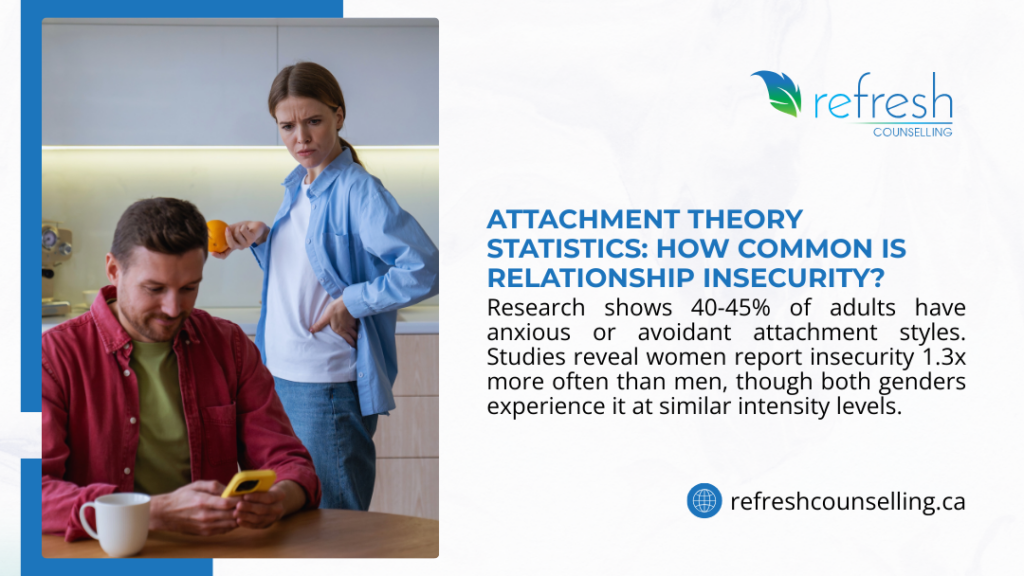
According to attachment style research, a large proportion of adults exhibit insecure attachment patterns, with some surveys suggesting that nearly half of adults show insecure attachment traits.
What you’ll learn in this article:
- The real reasons behind relationship insecurity
- 6 practical ways to feel more secure and confident
- When insecurity signals deeper issues that need attention
- How to talk to your partner about your feelings without pushing them away
What Causes Insecurity in Relationships
Understanding why you feel insecure helps you address the real problem instead of just managing symptoms.
| Common Cause | What It Looks Like | How It Affects You |
| Past relationship hurt | Previous partner cheated or left suddenly | You expect it to happen again |
| Childhood experiences | Parents were unpredictable or emotionally absent | You learned relationships aren’t safe |
| Low self-worth | You don’t feel valuable or lovable | You assume partner will leave for someone better |
| Anxious attachment | You need constant reassurance to feel okay | Small changes in partner’s behavior trigger panic |
| Partner’s behavior | They’re genuinely distant or inconsistent | Your insecurity might be picking up real issues |
Sometimes insecurity comes from inside you—old wounds or patterns you learned growing up. Other times it comes from actual problems in your current relationship.
If your partner is emotionally unavailable or consistently distant, your insecurity might be a reasonable response to their behavior, not something wrong with you.
6 Practical Ways to Stop Being Insecure in Relationship
1. Notice Your Thoughts Without Believing Them Automatically
Your brain creates stories to explain your partner’s behavior. These stories feel true, but they’re often just anxious thoughts.
When you notice yourself thinking “they’re probably talking to someone else” or “they’re going to leave me,” pause. Ask yourself: what evidence do I actually have for this thought?
| Anxious Thought | Reality Check Question | More Balanced Thought |
| “They’re losing interest in me” | What actual evidence supports this? | “They’ve been stressed at work, not distant from me” |
| “I’m not good enough for them” | What facts prove I’m not enough? | “They chose to be with me for real reasons” |
| “They’ll leave me for someone better” | Has this actually happened in this relationship? | “This fear comes from my past, not my present” |
Questioning anxious thoughts doesn’t make them disappear, but it stops you from treating them as facts. Over time, this practice weakens the power insecurity has over you.
2. Learn How to Communicate Your Needs in Relationship
Insecurity grows when you hide your feelings and hope your partner will guess what you need. They can’t read your mind, and silence creates more distance.
Learning how to communicate your needs in a relationship without blame or criticism helps your partner understand what you’re experiencing. It gives them a chance to reassure you or address real issues.
Clear, non-accusatory communication reduces anxiety because you’re taking action instead of sitting with fear.
3. Work on Your Own Self-Worth Outside the Relationship
When your entire sense of value depends on your partner’s approval, insecurity runs your life. Every small change in their mood feels like proof you’re not enough.
Building self-worth outside the relationship means:
- Pursuing hobbies and interests that make you feel capable
- Maintaining friendships that don’t involve your partner
- Setting and achieving small goals that have nothing to do with romance
- Treating yourself with the same kindness you’d show a good friend
4. Stop Comparing Your Relationship to Others
Social media shows you everyone’s highlight reel. You see other couples looking perfect and feel like your relationship doesn’t measure up.
These comparisons fuel insecurity and you start believing your partner should act differently, look different, or treat you the way you see online.
Real relationships include boring Tuesday nights, disagreements about dishes, and moments of disconnection. The couples who look perfect online deal with the same struggles you do, but they just don’t post those parts.
Focus on your actual relationship, not the imaginary perfect version you see elsewhere. Ask yourself:
- Are we happy together most of the time?
- Do we treat each other with respect?
That matters more than how things look from the outside.
5. Address Real Issues Instead of Spiraling in Anxiety
Sometimes insecurity isn’t all in your head. Sometimes your gut is picking up on real problems in the relationship.
If your partner never listens to you, dismisses your feelings, or regularly makes you feel small, your insecurity might be a signal that something needs to change.
Don’t convince yourself you’re “just being insecure” if your partner’s behavior is genuinely hurtful. Trust your instincts while also being honest about which fears are old patterns versus real problems.
6. Get Professional Support When Insecurity Takes Over
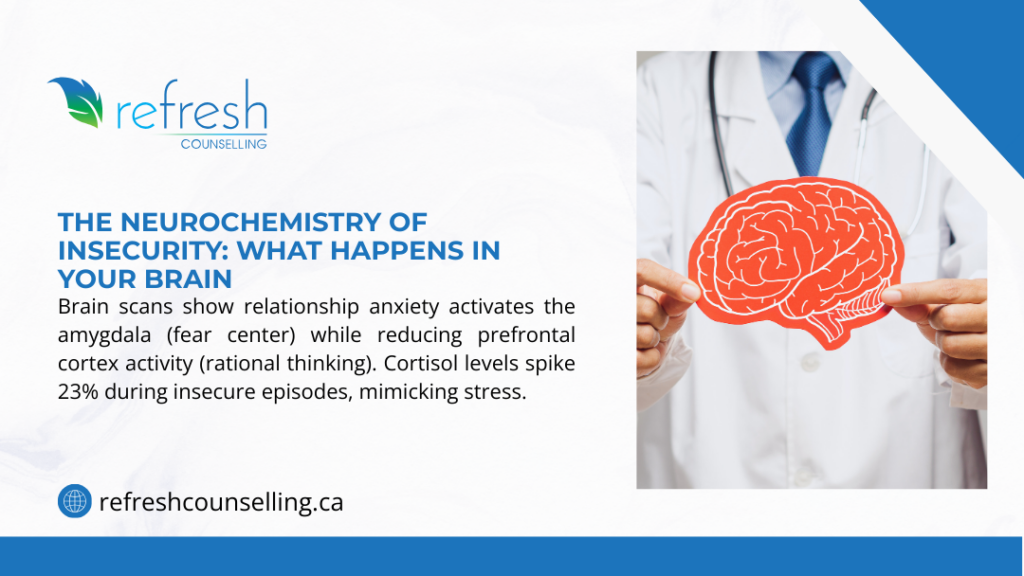
You don’t have to figure out how to stop being insecure in a relationship entirely on your own. Professional support helps you understand where insecurity comes from and develop healthier patterns.
Therapy is especially helpful when:
- Insecurity affects your daily functioning
- You can’t stop obsessive thoughts about your partner
- Past trauma influences current relationships
- Your partner is willing, but you don’t know how to rebuild security together
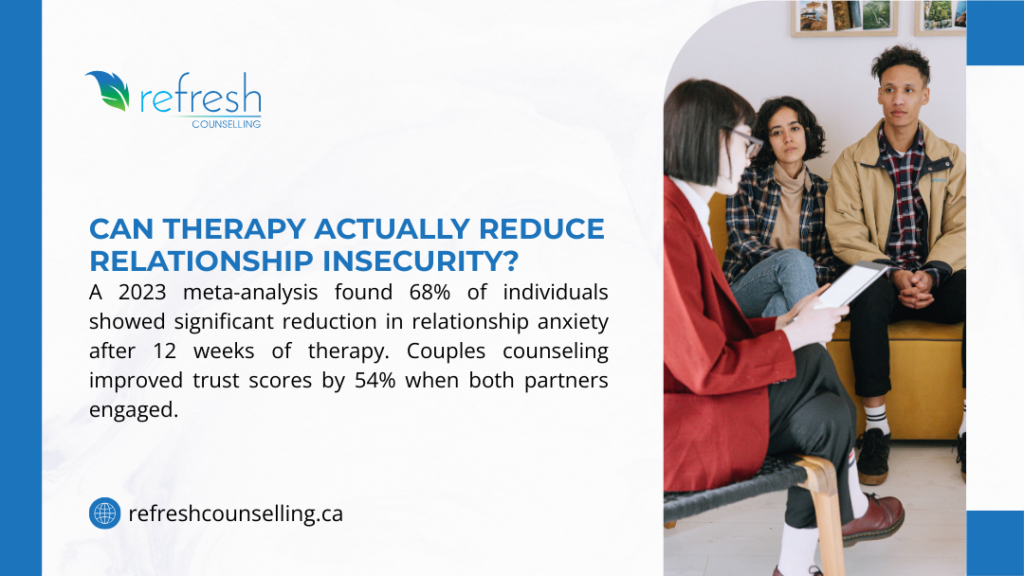
At Refresh Counselling, therapists help you identify patterns driving insecurity and teach practical skills for managing relationship anxiety. Both individual and couples counseling address insecurity at its roots.
When Insecurity May Need Extra Support
Not all relationship insecurity is the same. Sometimes it points to patterns that need more serious attention.
Consider reaching out to a professional if:
- Insecurity is getting worse despite your efforts
- You check your partner’s phone, social media, or location regularly
- Your partner feels controlled or suffocated by your need for reassurance
- Insecurity from one relationship is affecting new, healthy relationships
- You’ve experienced trauma that makes all relationships feel unsafe
These patterns don’t mean something’s wrong with you. They mean you’re dealing with wounds that need proper support to heal.
Take the Next Step Toward Reconnection
At Refresh Counselling, we have more than 10 years supporting couples through communication and emotional connection challenges, the team understands how these patterns develop and how to shift them safely.
Our couples counselling services focus on rebuilding emotional connection in practical, step-by-step ways that respect where both partners are starting from.Professional support is available when you’re ready to take that step.Reach out to our team to learn more about how we can help your relationship move from disconnection to genuine emotional closeness.
Frequently Asked Questions (FAQ) On How To Stop Being Insecure In A Relationship
Is it normal to feel insecure in a relationship?
Most people experience relationship insecurity at some point, especially in new relationships or after past hurts. It becomes a problem when it controls your behavior, damages the relationship, or affects your mental health consistently.
Can a relationship survive if one partner is very insecure?
Yes, if both people are willing to work on it. The insecure partner needs to address their patterns through self-work or therapy, while the secure partner provides reasonable reassurance without enabling unhealthy behaviors. Professional support helps couples navigate this together.
How long does it take to stop feeling insecure in a relationship?
With consistent effort and possibly therapy, many people see meaningful improvement in 2-4 months. Deeper insecurity from trauma or attachment wounds may take longer to fully address.
What’s the difference between healthy awareness and insecurity?
Healthy awareness notices actual patterns in your partner’s behavior and addresses real issues calmly. Insecurity creates stories without evidence, assumes the worst, and reacts from fear rather than facts. If your concerns are based on consistent, observable behaviors, they’re likely valid intuition, not insecurity.