
Research from clinics and therapists using evidence-based approaches shows that couples who fully engage in therapy report significant improvements in relationship satisfaction, communication, and emotional connection.
This article helps you understand what emotional unavailability actually looks like in relationships and what causes it.
You’ll learn practical ways to reconnect with an emotionally distant partner, when the pattern becomes serious, and how professional support can help both of you build a healthier connection.
What Does It Mean When Someone Is Emotionally Unavailable?
When you are emotionally unavailable, you feel like you’re living with a stranger sometimes. Your partner is physically there but emotionally checked out, and you can’t figure out why or how to fix it.
Emotional unavailability means your partner struggles to share feelings, connect deeply, or be vulnerable with you and they might pull away when conversations get personal or meaningful.
But this emotional state doesn’t always mean that they don’t care about you. Sometimes people shut down emotionally because of stress, past hurts, or patterns they learned growing up.
4 Common Signs of Emotional Unavailability in a Relationship
When my partner is emotionally unavailable, specific behaviors show up that create distance between us. These signs help you recognize what’s actually happening instead of just feeling confused or hurt.
- Difficulty In Expressing Feelings
Your partner struggles to tell you how they feel about anything meaningful. Conversations stay surface-level and safe, never going deeper into emotions or vulnerabilities.
- Avoiding Deeper Conversations
Any time you try to discuss feelings, the future, or relationship concerns, they change the subject or shut down completely. Important talks get postponed indefinitely or dismissed as “not a big deal.”
- Pulling Away When Things Get Emotional
The moment emotions come up in any conversation, they physically or emotionally withdraw. They might leave the room, get defensive, or go silent until the moment passes.
- Confusing Signals
They’re warm and connected one minute, then distant and cold the next. You never know which version of your partner you’re going to get, which makes you constantly uncertain about where you stand.
Sign | What It Looks Like | How It Affects You |
Limited emotional sharing | Rarely talks about feelings or inner thoughts | You feel shut out of their inner world |
Dismissive of your emotions | Minimizes or ignores your feelings when you share | You stop sharing because it feels pointless |
Inconsistent affection | Sometimes loving, sometimes cold and distant | You feel anxious and unsure in the relationship |
Avoids commitment conversations | Won’t discuss future plans or relationship needs | You feel stuck and uncertain about the future |
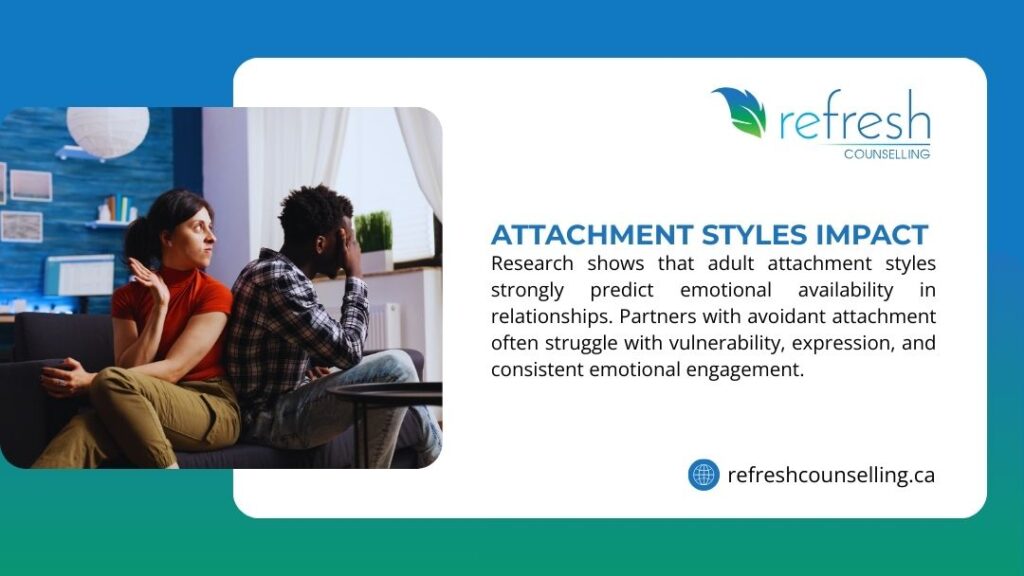
What Causes Emotional Unavailability
Understanding why your partner is emotionally unavailable helps you approach the situation with less blame and more compassion. Several common causes create this pattern in people.
Cause | What It Looks Like | How It Developed |
Past trauma or hurt | Avoids vulnerability to protect from pain | Previous relationships taught them opening up leads to getting hurt |
Stress and overwhelm | Emotionally shut down just to cope | Work, health, or family problems drain all emotional energy |
Childhood attachment patterns | Never learned to express emotions openly | Parents didn’t model emotional openness or punished feelings |
Fear of vulnerability | Believes showing emotions means weakness | Learned that emotional expression leads to judgment or rejection |
If you’re dealing with patterns where you ask “why my partner gets so defensive” whenever you bring up emotions or concerns, this often connects to deeper fears about being vulnerable.
How Emotional Unavailability Affects Your Relationship
Living with an emotionally distant partner impacts you in ways you might not even realize at first. The effects build up slowly until one day you wake up feeling completely disconnected from the person you love.
Impact on Relationship | What You Experience | Long-Term Effect |
Feeling alone together | Loneliness even during shared moments | Emotional disconnection becomes your normal |
Constant miscommunication | Small talks turn into arguments | Growing frustration on both sides |
Increased insecurity | Questioning yourself and the relationship | Self-doubt and lost confidence |
Withdrawal cycles | Push-pull pattern that repeats | Both partners feel rejected and misunderstood |
While these effects feel heavy and overwhelming sometimes, the good news is that emotional unavailability is something couples can genuinely work on together, step by step.
6 Ways to Support a Healthier Emotional Connection
1. Start with Small, Low-Pressure Conversations
My partner is emotionally unavailable during big serious talks, so I learned to start smaller. Ask about their day or share something simple from yours without expecting a deep response right away.
Try talking during activities where you’re side by side rather than face to face. Go for walks, cook together, or do something with your hands while chatting. The reduced intensity makes it easier for emotionally guarded people to open up a little.
Don’t turn every conversation into a therapy session or a relationship check-in. Sometimes just being together without heavy topics helps rebuild the foundation of connection that got lost somewhere along the way.
2. Learn How to Communicate Your Needs Without Blame
When you need to address issues, focus on your own feelings rather than attacking their behavior. Say “I feel lonely when we don’t talk much” instead of “You never talk to me about anything.”
This approach works better because it doesn’t trigger their defenses as quickly. People naturally shut down more when they feel attacked or criticized, especially if they already struggle with vulnerability.
Instead of Saying (Blaming) | Try This (Expressing Needs) | Why It Works Better |
“You never share anything with me” | “I feel disconnected when we don’t talk about feelings” | Focuses on your experience, not their failure |
“You’re so cold and distant” | “I miss feeling close to you” | Expresses what you want, not what’s wrong with them |
“You don’t care about this relationship” | “I need more emotional connection to feel secure” | States your need clearly without accusations |
“Why can’t you just open up?” | “I’d love to understand what you’re feeling” | Invites rather than demands |
For more specific techniques on this, our guide on how to communicate your needs in a relationship offers detailed strategies that actually work with emotionally guarded partners.
3. Show Appreciation for Small Steps
When your partner does share something emotional, even if it’s tiny, acknowledge it positively. A simple “thanks for telling me that” or “I appreciate you opening up” reinforces that vulnerability is safe with you.
Don’t immediately ask for more or use that one moment of openness to dump all your concerns on them. That teaches them that being vulnerable leads to overwhelming conversations they want to avoid.
Celebrate progress in small moments rather than waiting for some big breakthrough that might never come all at once.
4. Work on Your Own Emotional Patterns
Sometimes our reactions to our partner’s unavailability actually make it worse without us realizing it. If you constantly pursue them for connection, they might pull away harder because it feels like pressure.
Take time to understand your own needs and why their distance affects you so deeply. Often patterns from our own past or struggles with how to stop being insecure in relationship amplify how much their emotional distance hurts us.
Working on yourself isn’t about blaming yourself for their unavailability. It’s about showing up as your healthiest self so you can respond to them in ways that actually help instead of making things worse.
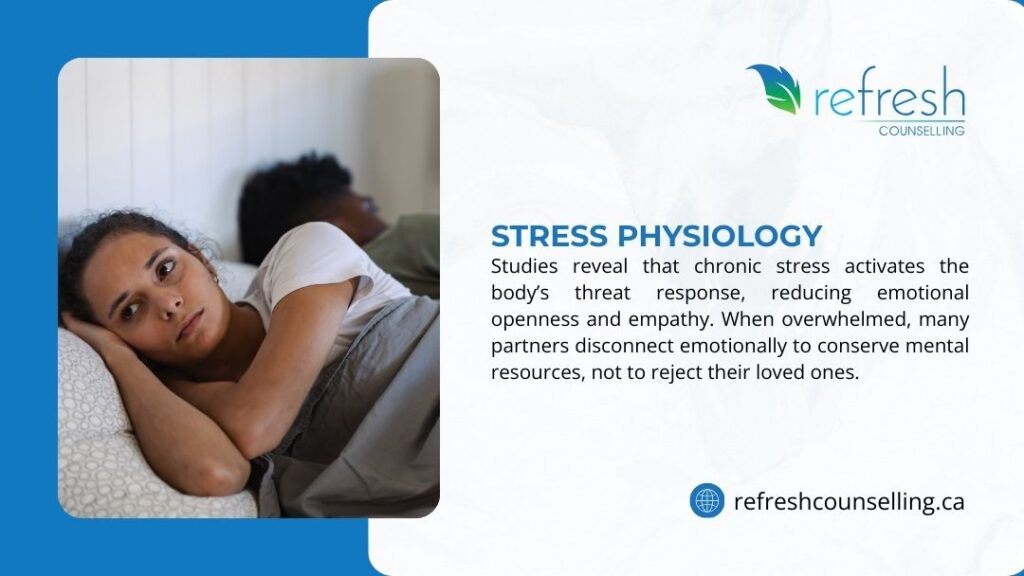
5. Create Emotional Safety in Your Relationship
Emotionally unavailable people often learned that sharing feelings leads to judgment, anger, or rejection. Show them through consistent actions that you won’t punish vulnerability when they do share.
This means staying calm when they finally open up, even if what they share is hard to hear. Getting upset or defensive in those moments confirms their fear that emotional honesty isn’t safe with you.
Building emotional safety takes time because they need repeated experiences of sharing without negative consequences before they’ll truly trust that pattern.
| Strategy | What It Means | Why It Helps |
Stay calm during vulnerability | Don’t react strongly when they open up | Shows them sharing is safe, not risky |
Keep their confidence | Don’t share what they tell you with others | Builds trust that privacy is respected |
| Validate their feelings | Acknowledge their emotions as real and important | Makes them feel heard instead of judged |
| Be consistent | Show up emotionally the same way over time | Creates predictability they can rely on |
6. Suggest Activities That Build Connection
Shared experiences create emotional bonds even when direct conversation feels too hard. Try new things together, work on projects as a team, or revisit activities you both used to enjoy.
Physical affection without expectations also helps. A hug, holding hands during a movie, or sitting close together sends messages of connection that don’t require words or emotional vulnerability right away.
These indirect methods of connecting often work better with emotionally unavailable partners than sitting down for a “we need to talk” conversation that makes them want to run away.
When Emotional Unavailability Becomes a Long-Term Pattern
Not all emotional unavailability is temporary stress or a phase your relationship is going through. Sometimes it reflects deeper issues that need professional attention to address properly.
Signs It’s More Than a Phase:
- Your partner shows zero interest in working on connection despite your efforts over months or years
- They dismiss your concerns repeatedly
- Refuse to acknowledge there’s even a problem
- Actively avoid any conversation about the relationship
Unmet Needs Piling Up:
You’ve been patient and understanding, but your own emotional needs aren’t getting met at all. You’re starting to feel resentful, exhausted, or like you’re giving everything while getting nothing back emotionally.
Long-Term Avoidance Patterns
This isn’t new behavior from recent stress—your partner has been emotionally shut down for years, possibly the entire relationship.
If trust issues are part of the pattern, learning how to rebuild trust in a relationship becomes an important part of moving forward together.
Moving Forward: Rebuilding Emotional Connection
At Refresh Counselling, we have more than 10 years supporting couples through communication and emotional connection challenges, the team understands how these patterns develop and how to shift them safely.
Our couples counselling services focus on rebuilding emotional connection in practical, step-by-step ways that respect where both partners are starting from.
Professional support is available when you’re ready to take that step. Reach out to our team to learn more about how we can help your relationship move from disconnection to genuine emotional closeness.
Frequently Asked Questions (FAQ) On “My Partner Is Emotionally Unavailable”
How do I know if my partner is emotionally unavailable or just stressed?
Temporary stress usually lifts after a few weeks once the stressful situation improves, and your partner returns to normal emotional connection. Emotional unavailability persists for months or years regardless of external circumstances.
Can an emotionally unavailable person change?
Yes, but only if they recognize the pattern and genuinely want to change it. Change requires self-awareness, willingness to be uncomfortable during growth, and usually professional help to address root causes.
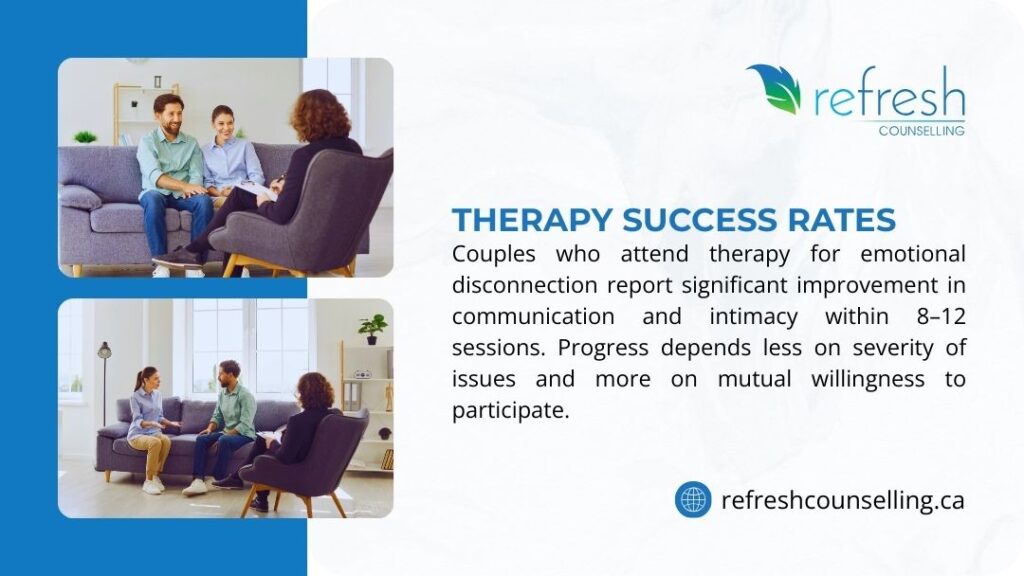
How long does it take to improve emotional connection with an unavailable partner?
The timeline depends on how long the patterns have existed, whether professional help is involved, and how consistently both people practice new ways of connecting.