
Research by Dr. John Gottman on defensiveness, highlights that it can often be a sign of challenges in a relationship and is common in many couples who face difficulties over time.
When you ask “why does my partner get so defensive,” you’re noticing a pattern that can damage even the strongest relationships if left unaddressed.
This article helps you understand the real reasons behind defensive behavior in your partner. You’ll learn what triggers defensiveness, how it affects your relationship, and specific ways to communicate that reduce defensive reactions.
“Why Does My Partner Get So Defensive?” Here Are Five Common Reasons
Understanding why your partner gets defensive helps you respond in ways that actually improve communication instead of making things worse.
- Fear of Criticism and Feeling Attacked
The most common reason why your partner gets so defensive is that they hear criticism even when you don’t mean it that way. Their brain processes your concern as an attack on their character, not just feedback about a specific behavior.
When someone feels criticized, their body releases stress hormones that trigger a fight-or-flight response. Your partner isn’t choosing to get defensive on purpose, but their nervous system is reacting to what it sees as a threat.
Here are some common examples of things you might say, how your partner could interpret them, and why they may respond defensively:
| What You Said | What They Heard | Why They Got Defensive |
| “You forgot to call me back” | “You’re unreliable and don’t care” | Feels like character attack |
| “We need to talk about money” | “You’re bad with finances” | Anticipates blame |
| “I feel lonely lately” | “You’re failing as a partner” | Hears they’re not enough |
| “Can we discuss this problem?” | “You created this problem” | Expects to be blamed |
Dr. John Gottman’s research with over 3,000 couples found that defensiveness is one of the “Four Horsemen” that predict divorce with 90% accuracy. This happens because defensive responses block real communication and create cycles that repeat over and over.
- Past Emotional Wounds Shape Current Reactions
Sometimes the question “why does my partner get so defensive” has roots in their past experiences, not in what you actually said. People who grew up in homes where they were criticized frequently learn to protect themselves automatically.
Your partner might have had parents who blamed them for everything, or previous relationships where they were constantly told they weren’t good enough. These old wounds make them hear current feedback through a filter of past pain.
- Low Self-Esteem Creates a Defensive Shield
Partners with low self-esteem often get defensive because they already believe negative things about themselves. When you bring up a concern, it confirms what they secretly fear is true.
They defend themselves not because they think they’re perfect, but because your feedback feels too painful to accept. The defensiveness is actually a sign they’re struggling with their own self-worth.
If you find yourself being insecure in a relationship along with your partner’s defensiveness, both patterns might be feeding off each other.
- Feeling Misunderstood or Unheard
Many times partners ask “why does my partner get so defensive” when the real issue is that both people feel unheard. Your partner might get defensive because they don’t think you understand their perspective or intentions.
When someone feels misunderstood repeatedly, defensiveness becomes their way of saying “that’s not what I meant” or “you’re not seeing my side.” The defensive reaction is trying to protect their view of the situation.
- Stress From Outside the Relationship
Sometimes the answer to why your partner gets so defensive has nothing to do with you at all. There are other factors such as work stress, family problems, health concerns, or financial pressure that can make anyone more reactive.
When people are overwhelmed by life stressors, they have less emotional capacity to hear feedback calmly. Small concerns feel like huge demands when someone is already running on empty.
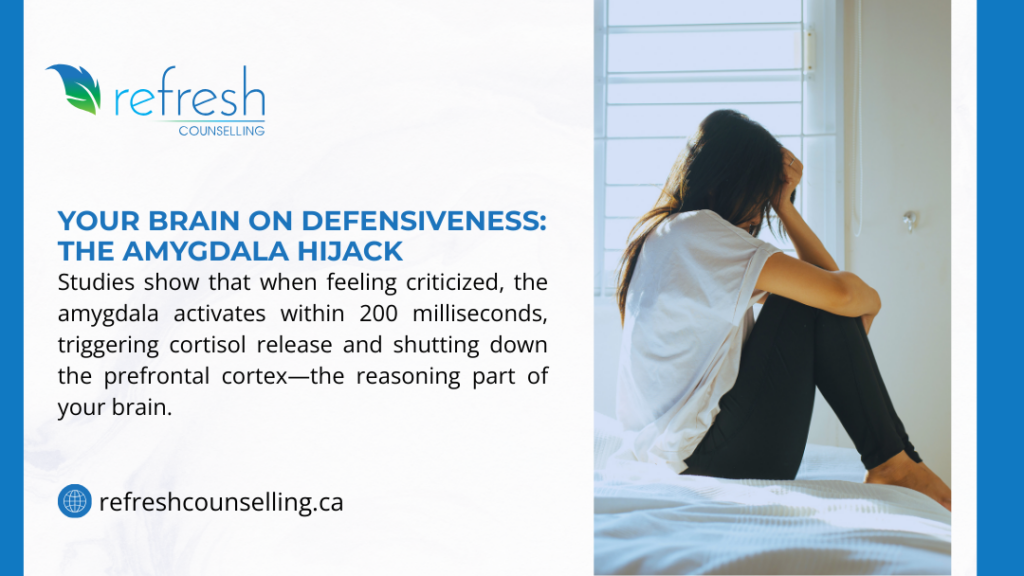
How Defensiveness Shows Up in Relationships
Understanding the specific ways defensiveness appears helps you recognize the pattern early.
Making Excuses Instead of Taking Responsibility
Your partner explains away their behavior instead of acknowledging your feelings. They give reasons why they had to act that way, which makes you feel like your concern doesn’t matter.
This is one of the clearest signs when people wonder why their partner gets so defensive. The focus shifts from the actual issue to justifying the behavior.
Turning Things Around on You
Some partners respond to concerns by immediately pointing out something you did wrong. This defensive tactic takes the spotlight off their behavior and puts you on the defense instead.
When you ask “why does my partner get so defensive,” this pattern of reverse blame is extremely common. It prevents any real resolution because now both people are defending themselves.
Shutting Down Communication Completely
Your partner might go silent, leave the room, or refuse to discuss the issue at all. This stonewalling behavior is a form of defensiveness that Dr. Gottman’s research shows is particularly harmful to relationships.
Partners who shut down are so overwhelmed by feeling criticized that they can’t engage at all. Their nervous system literally goes into shutdown mode.
Getting Angry or Aggressive
Some defensive reactions look like anger—raised voices, harsh words, or aggressive body language. This happens when the person’s fight-or-flight system chooses “fight” over “flight.”
The anger isn’t really about what you said. It’s their fear and shame coming out as aggression because those vulnerable feelings are too uncomfortable to show.
How Defensiveness Damages Your Relationship Over Time
When you keep wondering why your partner gets so defensive, that pattern is slowly eroding your connection in specific ways.
| Area Affected | How Defensiveness Damages It | Long-Term Result |
| Communication | Honest conversations become impossible | You stop sharing concerns |
| Trust | Your feelings get dismissed repeatedly | You feel emotionally unsafe |
| Intimacy | Emotional walls prevent closeness | Growing distance between you |
| Problem-Solving | Issues never get resolved | Same problems repeat endlessly |
Dr. Gottman’s research found that couples who maintain a 5:1 ratio of positive to negative interactions thrive. Defensiveness destroys this ratio because one defensive exchange can undo multiple positive moments.
The cycle becomes predictable: you bring up a concern, your partner gets defensive, you feel unheard, resentment builds, and you either stop communicating or start criticizing more. Both choices make the relationship worse.Learning how to communicate your needs in a relationship becomes essential when defensiveness is blocking healthy conversations.
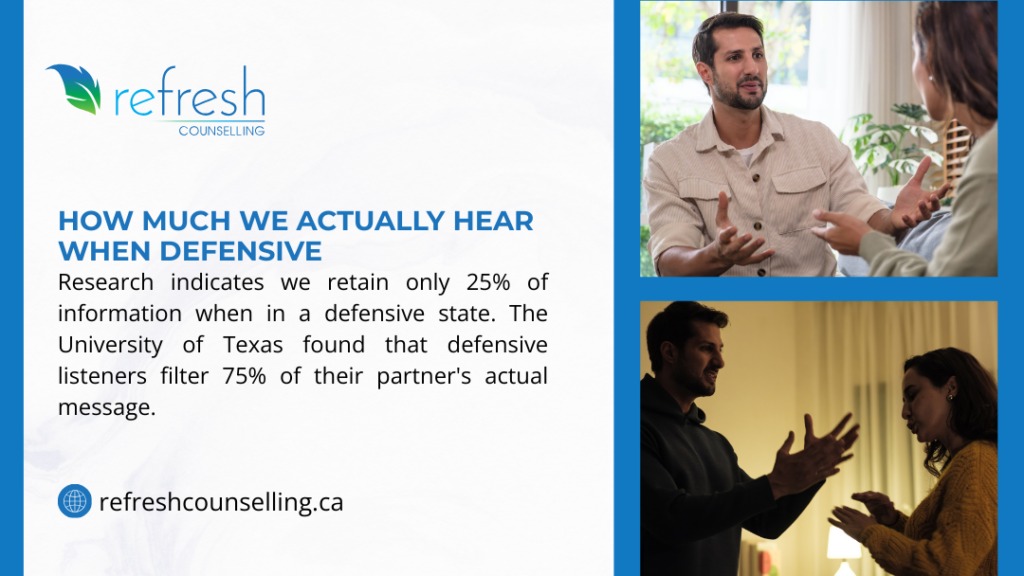
What to Do When Your Partner Gets Defensive
You can’t control your partner’s reactions, but you can change how you communicate to reduce defensive responses.
- Use “I” Statements Instead of “You” Accusations
The way you start a conversation hugely affects whether your partner gets defensive. Beginning with “you always” or “you never” triggers defensiveness almost every time.
Try this approach: “I feel hurt when plans change without discussion” instead of “You never consider my schedule.” This small change reduces the chances of defensive reactions.
| Instead of Saying | You Can Say |
| “You ignore me all evening” | “I feel lonely when we don’t talk after work” |
| “You’re always late” | “I get worried when you’re late without texting” |
| “You don’t care about my feelings” | “I need to feel heard when I share concerns” |
| “Why are you being defensive?” | “I want to understand your perspective” |
- Stay Calm and Don’t Take the Bait
When your partner gets defensive, your natural reaction might be to get frustrated or defensive yourself. This creates an escalating cycle where both people end up hurt and angry.
Take a deep breath and stay calm. Remember that their defensiveness is about their fear and insecurity, not about you being wrong to bring something up.
- Validate Their Feelings Before Discussing the Issue
One powerful way to reduce defensiveness is to acknowledge your partner’s experience before stating your concern. This helps them feel understood instead of attacked.
Say something like: “I know you’ve been stressed with work lately, and I appreciate everything you’re managing. I also need to talk about something that’s been bothering me.”
- Give Them Space if They Need It
Some people need time to process feedback before they can respond without defensiveness. If your partner gets very defensive, suggest taking a break and returning to the conversation later.
Be specific about when you’ll come back to it: “Let’s both take 30 minutes to calm down, then we can talk about this again.” This prevents the issue from being avoided forever.
- Focus on Specific Behaviors, Not Character
The question “why does my partner get so defensive” often points to feeling like their character is under attack. Stick to discussing specific actions rather than making statements about who they are as a person.
Compare “You forgot our anniversary” to “You’re thoughtless and don’t care about me.” The first is feedback about a behavior; the second attacks their character and will always create defensiveness.
If trust issues are part of the pattern, learning how to rebuild trust in a relationship provides additional strategies for healing.
Signs Professional Support Could Help
Watch for these indicators that couples counseling might benefit your relationship:
- Your partner gets defensive about almost everything you say
- Conversations about concerns always escalate into fights
- You’ve tried improving communication but nothing changes
- Defensiveness has been a pattern for years, not just months
- One or both of you feel emotionally unsafe in conversations
- Your partner is emotionally unavailable beyond just defensiveness
In therapy sessions at Refresh Counselling, couples learn to identify defensive triggers and develop new response patterns together. A trained therapist helps both partners understand why defensiveness happens and practice healthier ways of communicating.
Most couples see improvements within 12-20 sessions, with many noticing positive changes even sooner. The key is that both partners participate actively in the process.
Therapists teach specific skills like:
- Recognizing early warning signs of defensiveness
- Pausing before responding reactively
- Expressing vulnerability instead of defending
- Listening to understand rather than to respond
These aren’t just abstract concepts—you practice them right there in sessions with guidance from someone who can see the patterns you might miss.
Connect, Heal, and Grow Together with Refresh Counselling
At Refresh Counselling in Calgary, our experienced therapists specialize in helping couples break free from destructive communication patterns.
Whether you’re dealing with long-standing patterns or recent changes in how your partner responds, our team provides the support you need. We offer both in-person sessions in Calgary and online counseling throughout Alberta.
Our couples counseling services create a safe space where both partners can heal communication patterns and rebuild connection.
Contact Refresh Counselling today to schedule your first appointment.
Frequently Asked Questions (FAQ)
Why does my partner get so defensive when I bring up small things?
Your partner might get defensive because they hear criticism of their character, not just feedback about a specific behavior. Past experiences with criticism, low self-esteem, or fear of rejection can make even minor feedback feel like a major attack.
Is defensiveness a sign my relationship is failing?
Defensiveness itself doesn’t mean your relationship will fail, but it’s one of the warning signs that need attention. Research shows defensiveness predicts relationship problems when it becomes the default response to concerns.
How can I stop triggering my partner’s defensiveness?
Start conversations with “I” statements about your feelings rather than “you” statements that sound like accusations, validate your partner’s perspective before sharing your concern and avoid bringing up issues when either of you is stressed, tired, or already upset about something else.