
When your child has mood swings, it leaves you confused and not sure what to do. It is frustrating to see one moment of your child smiling, laughing, and then they start crying or get angry about things that seem to be small.
Child mood swings can leave parents feeling confused and helpless. One minute your child is happy, the next they’re crying or angry about something small.
As a child psychologist, I can confidently tell you that child mood swings are completely normal, especially at a young age, and it is something not to worry about as a parent.
Some Common Reasons For Child Mood Swings
Child mood swings are caused when the brain is still developing, and kids do not have the same emotional control that adults do.
Here are some common reasons children between 2 and 12 experience mood swings:
Age Group | Common Triggers | How Long Do They Last |
Ages 2-4 | Hunger, being tired, and too much noise | 5-20 minutes |
Ages 5-10 | School stress, friend problems, changes at home | 10-45 minutes |
Ages 11-12 | Body changes, wanting independence, and peer pressure | 15 minutes to hours |
Your child’s daily routine affects their emotions, too. When kids miss sleep or eat too much sugar, mood swings usually get worse.
Big changes like moving houses, new schools, or family stress also affect their psychology because their brain needs time to get used to these shifts.
In order for you to respond calmly instead of getting frustrated with your kid’s mood swings, you have to understand why children act out and what you can do.
Normal VS Concerning Child Mood Swings
Most emotional ups and downs are part of growing up, but there are some signs that mean you should pay closer attention to.
What’s Normal | When to Worry |
Short outbursts that end quickly | Hours of intense emotions daily |
Reactions make sense for the situation | Huge responses to tiny problems |
Your child calms down with help | Nothing you do helps them settle |
Happens sometimes during stress | Multiple meltdowns every single day |
Red flags include child emotional outbursts where your child hurts themselves or others. Also watch for mood changes that stop them from sleeping or eating normally for weeks.
When your kid can’t function at school or at home, taking professional support is something that will be important for you. Refresh Counselling is one of Calgary’s top practices for helping children manage their emotions and develop healthy coping skills. Their team has helped many families with child mood swings and their mental well-being. Learn more here.

How to Handle Child Mood Swings in the Moment
The first thing that I suggest to you as a child psychologist is that the way you respond to your child’s mood swings is very important, because kids (especially the young ones) quickly notice that and make things worse.
Here are 4 steps that you should follow when facing child mood swings:
Step #1
Get down to their eye level when you speak to them, because connecting face-to-face shows that you are present and ready to help them get through that hard moment.
Step #2
Try to stay relaxed and speak in a calm voice that makes them feel safe.
Step #3
During a hard moment that your child is going through, physical comfort is also a good idea. Giving them a hug would make things go for the good.
Step #4
I really suggest that you first give your child some space to feel the emotions and don’t try to calm him down at the moment. Let the feeling move through them naturally instead of immediately trying to make it stop.
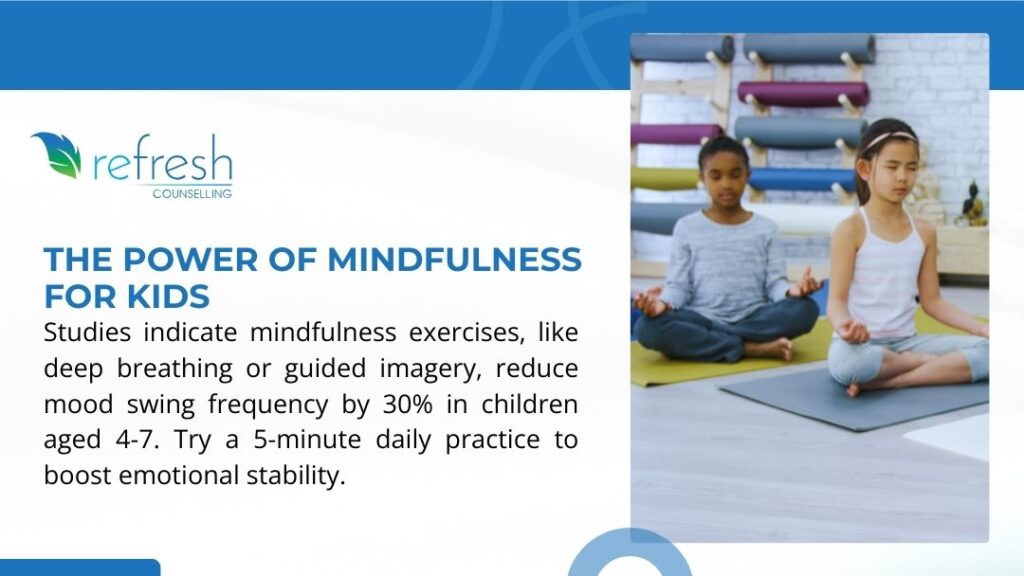
Prevention Strategies That Are Worth Trying (Mostly With Ages 4-7)
There are some small changes you can make in your daily routine that will prevent child mood swings.
Daily Basic Suggestions:
- As a child psychologist, I strongly suggest that you keep consistent bedtimes and wake times because child mood swings mostly occur when kids are tired.
- Give them healthy snacks between meals because kids often get upset when they are hungry, and a quick snack can help them.
- This is very important: Limit screen time before bed because exposure to damaging rays makes it harder for kids to stay emotionally balanced.
- Physical activity helps kids release energy and stress naturally, so it is best to take them to a local park 3-4 times a week.
When to Seek Professional Help
Sometimes families need more support than parents can provide alone. This doesn’t mean you’re failing as a parent.
Professional counselors know specific techniques for different ages. We use play therapy, art activities, and age-appropriate talk therapy.
Type of Help | What It Includes | Good For |
Individual child therapy | One-on-one sessions with your child | Anxiety, trauma, behavioral issues |
Family counselling | Sessions with parents and kids together | Communication problems, major life changes |
Parent coaching | Teaching you new strategies | Learning how to respond differently |
Family counselling helps when the whole family feels stuck in negative patterns.
For teens, mood swings often need different approaches. You might recognize some challenges in articles about teen anger or social struggles.
Your Next Steps
Child mood swings are exhausting, but they don’t have to control your family’s life. Most kids learn better emotional control with consistent support and time.
Start with one small change. Maybe it’s an earlier bedtime or a daily calm-down routine. Build from there.
Research Counseling offers a free 20-minute consultation with a psychologist (virtually or in-person) to help you discuss your child’s needs, goals, and any concerns you may have as a parent. I suggest you leave a free meeting here with our professionals.